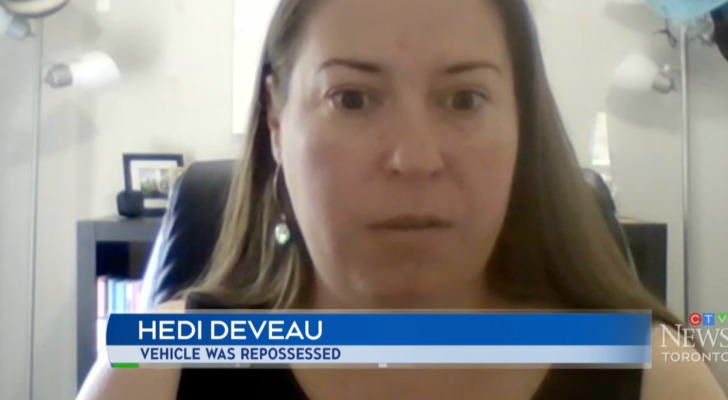
THIS OAKVILLE SMALL BUSINESS OWNER TOOK A $1,000 TITLE LOAN — IT COST HER $4,000 AND HER JEEP
Three years ago, Oakville small business owner Heidi Deveau needed cash, so she took out a $1,000 “title loan” from BHM Financial, using her paid-off Jeep Wrangler as collateral. It looked like a manageable, short-term fix. It turned into a $4,000 bill and a repossessed vehicle.
“It’s extremely frustrating,” Deveau told CTV News. Deveau isn’t the only one. Morgan Hempen, a single mother in Digby, N.S., took out the same $1,000 loan from the same lender, using her vehicle the same way. When her bank account changed and payments lapsed, her car was repossessed too, and she was told she needed $5,800 to get it back.
Both loans started at $1,000. Both ended with the borrower owing thousands more than they’d borrowed, and no car to show for it. Here’s how a small, secured loan gets that expensive, and what to check before you use your vehicle to borrow money.
Don't Miss
- A single line on your car insurance policy could be inflating your premium by up to 30% — here's what to change
- Here are the 5 biggest differences between rich and poor Canadians — which side do you fall on?
- Warren Buffett used these 4 solid, repeatable money rules to turn $9,800 into a $150B fortune. Here’s how to apply them to your own life
How does a $1,000 loan turn into $4,000?
Deveau’s loan carried payments of $83 a month for 24 months, working out to roughly $1,992 over the full term before any missed payments or fees. She believed the loan was paid off last fall, until she was told she was behind and would need to pay $4,000 to get her Jeep back.
The lender said in a statement that once an account falls into serious default, additional costs can be added on top of the loan balance, including non-sufficient-funds fees, bank charges, bailiff fees, towing, storage and transportation. Those are the costs of recovering and reselling a repossessed vehicle, and under the loan agreement, they land on the borrower.
Your vehicle is the collateral, and the lender can take it
A title loan works differently from a typical personal loan because you’re pledging an asset you already own outright. Taking out a title loan means signing away your rights to the vehicle, so if you fall short on the deal’s terms, the lender is entitled to seize it. That’s what makes a title loan riskier than, say, a missed credit card payment. Falling behind doesn’t just hurt your credit, it can cost you the vehicle you may need to get to work.
Read more: 3 essential money moves to make once you’ve saved $50,000
What the rules actually allow lenders to charge
Federally, the most a lender can charge in interest is capped at 35% annual percentage rate (APR) under the Criminal Code, down from the equivalent of roughly 48% APR before January 1, 2025. But that cap applies to interest, not necessarily to the collection and recovery fees layered on after a default, which is where costs like Deveau’s and Hempen’s balloon.
Provincial protection also varies widely: Alberta specifically regulates “high-cost credit” products, including title loans, capping annual rates at 32% and barring misleading advertising or harassment of borrowers. Ontario does not yet have an equivalent regime specific to title loans, so borrowers there have fewer guardrails than in some other provinces.
Before you put your car up as collateral
- Ask for the total cost of borrowing in writing, including exactly what you’d owe, dollar for dollar, if you miss a payment.
- Call the lender the moment you think a payment will be late. The company involved in Deveau’s and Hempen’s cases said it remains open to discussing payment arrangements to help prevent accounts from escalating to collection or repossession.
- Compare a title loan against a credit union small-loan option, a co-signed loan or a call to a nonprofit credit counsellor before signing anything that puts your vehicle at risk.
- If your vehicle has already been repossessed, get a full written breakdown of every fee being charged, and ask a licensed insolvency trustee or legal aid clinic whether any of those charges can be disputed.
Deveau says she’s still fighting to get her Jeep back and wants compensation for what she’s been through. Whatever happens with her case, the lesson for other Canadians is the one she wishes she’d known three years ago: a paid-off vehicle isn’t a low-risk way to borrow. It’s collateral, and if the payments slip, it can cost you thousands and your car.
What To Read Next
- Only 53% of eligible Canadian families have opened an RESP — parents are stuck on a myth that's dead wrong. Here's what it actually covers
- Dave Ramsey says this 1 indulgent purchase stops people from becoming wealthy. Here’s what he recommends instead
- Robert Kiyosaki admits he was wrong about gold — but here's why he's doubling down on his $35K prediction
- I’m 65, tired of working and have very little savings — is it possible to live off CPP alone? Yes, but you'll need to make these 3 big sacrifices
Join 19,000+ readers and get Money.ca’s best stories and exclusive interviews first — clear insights curated and delivered weekly. Subscribe now.
This article provides information only and should not be construed as advice. It is provided without warranty of any kind.
2026-09-13T16:08:33Z